Hard water scale
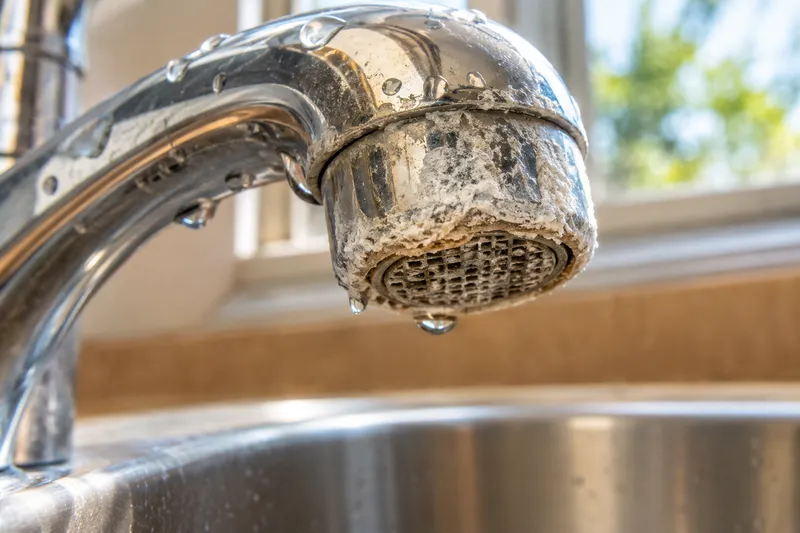
Minerals build up inside aerators, cartridges, valves and tank bottoms. Flow drops, fixtures drip, toilets keep running and water heaters start to rumble long before their time. Read how hard water affects your plumbing.

Leaks, clogs, slab leaks and water heaters are fixed by a licensed local plumber who can come out to your Bullhead City home.
Choose the repair you needOne call covers every plumbing repair in Bullhead City. Describe the trouble at your house in a sentence or two, and a licensed plumber based in Bullhead City can stop by to look.
Pick the problem that sounds closest to yours. Each page explains the warning signs, what usually causes them and how a plumber in Bullhead City repairs them, so you know what to expect before anyone knocks on your door.
If your problem does not fit neatly into one group, that is fine. Call and describe it, and we will work out together which repair it is.
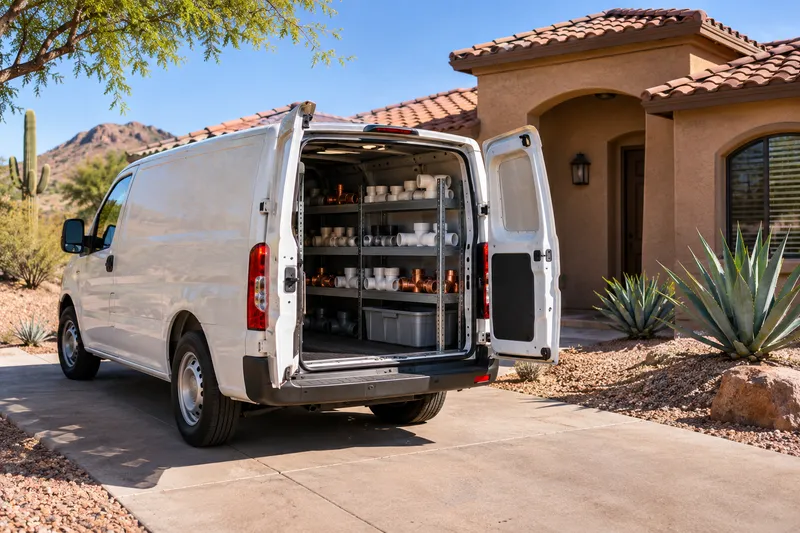
Plumbing here works harder than it does in milder places. Summer heat bakes garages where most water heaters live, the water carries a heavy load of minerals, and many houses sit on concrete slabs with the supply pipes buried underneath. Those three facts explain most of the calls we take.
When you call Plumber Bullhead, we ask what you are seeing, which room it is in and when you first noticed it. A licensed plumber then visits, tracks down the cause and talks you through the fix, and nothing gets done until you have said yes.
Most homes in Bullhead City are single story houses built on concrete, with the water heater in the garage and the main valve near the front of the house. Knowing that layout helps a plumber in Bullhead City get to the cause of a leak or a clog quickly once they arrive.
These are not the only repairs we handle, but they are the ones desert conditions make more common.
Minerals build up inside aerators, cartridges, valves and tank bottoms. Flow drops, fixtures drip, toilets keep running and water heaters start to rumble long before their time. Read how hard water affects your plumbing.
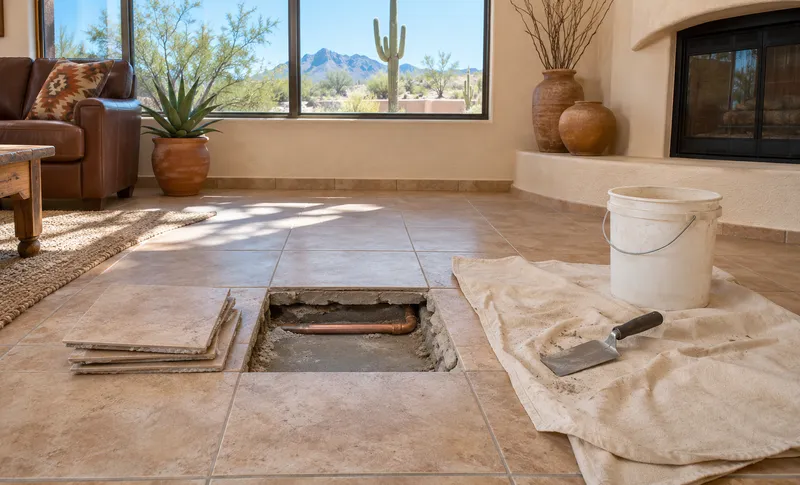
A hot spot on the tile, a hiss behind the baseboard or a meter dial that keeps creeping can point to a pipe leaking under the floor. Catching it early keeps water out of the slab and the walls. Our slab leak repair page covers the fix.
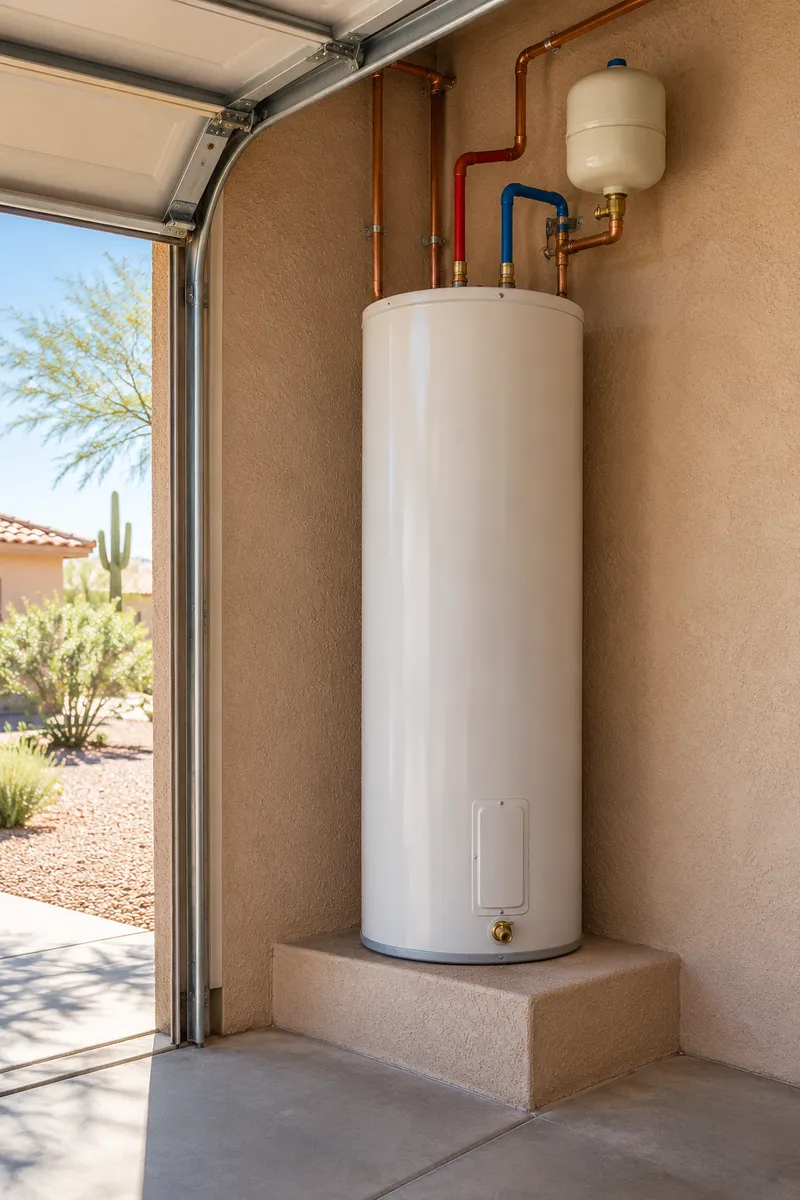
Scale and heat wear tanks, valves and burners faster. Leaks at the base, popping sounds and short showers are the usual signs a tank needs water heater repair before it fails outright.
A plumbing problem is stressful enough. Here is how hiring a plumber in Bullhead City through us usually goes, from the first minute to the finished repair.
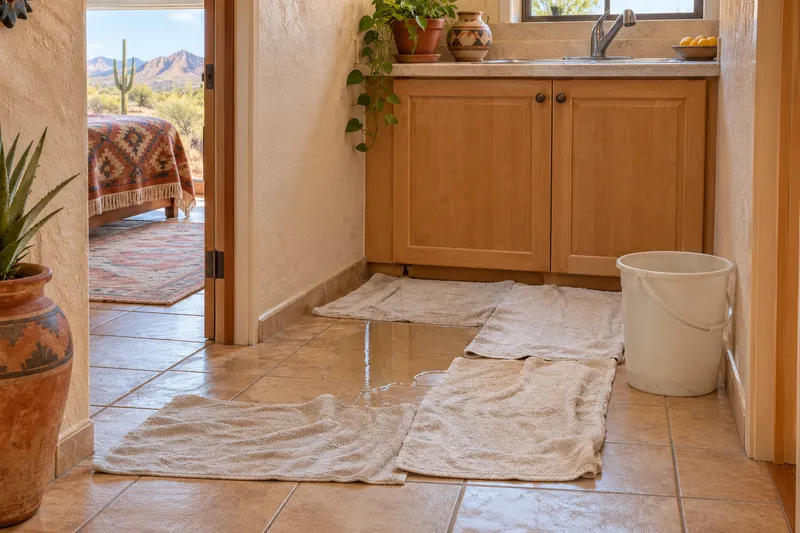
Describe the leak, clog or noise and give us your address. If water is spreading, we help you find the shut off first so the damage stops growing.
Someone licensed, who works in Bullhead City, arrives, sees the trouble firsthand and tests the fixture, pipe or heater involved.
You get an explanation of what failed, why it happened and how it can be fixed, all in plain words and before any tools come out.
Once you say yes, the plumber makes the repair, runs the water and checks for leaks before leaving.
Have the area around the problem cleared before the plumber arrives, such as emptying the cabinet under a sink or clearing stored boxes off the floor around the water heater. It makes the visit quicker and keeps your things dry.
Some problems get worse by the hour and some can wait for a booked visit. Use this as a rough guide, and ask a Bullhead City plumber on the phone if you are not sure.
Long stretches of high heat change how plumbing behaves. Cold water can come out of the tap warm in July, rubber washers and supply hoses dry out sooner, and pipes that run through hot attics or outside walls expand and contract every day.
Hard water adds to the strain. Scale narrows openings, wears valve seats and settles in the bottom of water heaters. A plumber who works here every day expects these things and checks for them on every visit.
The rare cold night matters too. Pipes and hose bibs on outside walls are rarely insulated here, so a hard freeze can split one. Covering outdoor faucets on the coldest nights is a simple habit worth keeping.
Learn how hard water wears plumbing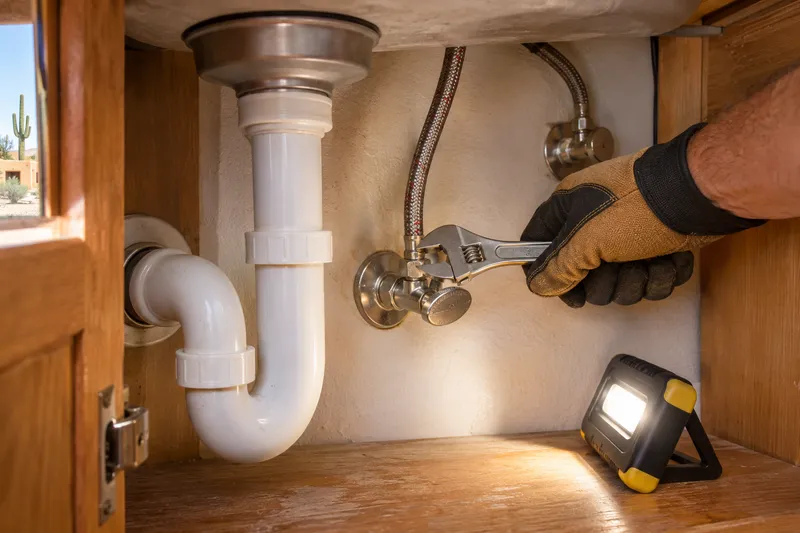
Most problems begin in one of four places. Knowing which one you are dealing with makes the call quicker.
Sinks in the kitchen see grease, food scraps and the heaviest daily use of any fixture in the house. Slow drains, a garbage disposal that hums, a dripping spout and a damp cabinet floor are the usual signs. The dishwasher and the ice maker line also connect here, and both can leak quietly behind the cabinets.
Toilets, showers, tubs and vanity sinks account for a large share of everyday repairs. Hair clogs, running toilets, worn shower valves and loose drain joints are common. A stain on the ceiling below an upstairs bathroom, where a house has one, is worth a call right away.
In most homes here the water heater, the softener if there is one and the main supply pipes sit in the garage. Summer heat is hard on all three. Look at the base of the heater and the pipe connections above it every few months for rust, crust or drips.
The buried line from the meter, the hose bibs and the irrigation connection are all outside. A soggy patch in a dry gravel yard, a hose bib that drips or a meter that turns with everything off can all point to a water line repair or a leak detection visit.
Make sure no faucet, dishwasher, washing machine or sprinkler timer is running. Then look at your water meter near the street. If the small leak indicator still turns, water is escaping somewhere, often under the slab or in the yard line.
Write down the reading, wait an hour without using water and read it again. A change confirms the leak. A plumber with leak detection gear can then find the exact spot without opening more floor or wall than needed.
Do the same test once or twice a year even when nothing seems wrong. Slab leaks often start small, and catching one early can spare you a wet floor and a much bigger repair later.
Open any of these to read what usually causes the problem and what a plumber in Bullhead City does about it.
Kitchen sinks clog with grease and food scraps, while bathroom sinks, tubs and showers clog with hair and soap. Hard water makes it worse because scale gives the debris something rough to cling to inside the pipe.
A plunger or a hand snake clears a lot of simple clogs. If the drain keeps slowing down, or water comes up in a second fixture, book drain cleaning so the line is cleared properly and tested.
A toilet that refills on its own is usually losing water past a worn flapper or a fill valve clogged with scale. A toilet that rocks has a loose base, and the wax ring under it can start to leak onto the floor.
Each of these is a small part with a clear fix. Our toilet repair page explains what gets replaced and why waiting can soften the subfloor.
Most drips come from a worn cartridge or washer, and scale shortens their life here. Leaks under the sink usually start at a supply hose, an angle stop or a loose drain joint, and they can soak a cabinet floor before anyone notices.
Check under your sinks every few months with a flashlight. If you find damp wood or a stain, faucet and sink repair covers the parts that usually need replacing.
Copper pipes can develop tiny pinhole leaks over the years, and a fitting can crack when a pipe is under strain. When a pipe bursts, water comes out fast, so close the main valve before anything else.
A plumber cuts out the damaged section and replaces it, then checks the rest of the line for weak spots. Pipe repair explains the materials used and when a longer section needs replacing.
A tank heater that runs out quickly often has a thick layer of sediment, a failed heating element or a worn dip tube. A tankless unit that cuts out mid shower is often clogged with scale or has a sensor fault.
Tell us the type and age of the heater when you call. Tankless water heater repair and tank repair are handled by the same local plumbers.
When just a single faucet or shower runs weak, the cause is usually a scaled aerator, shower head or cartridge right at that fixture. Unscrew the aerator and rinse it first, because that alone often brings the flow back.
If every tap is weak, the problem is further upstream. A main valve left half open, a worn pressure regulator or a leak in the supply line can each pull pressure down across the house, and a plumber can test each one with a gauge.
A sudden rise in usage with no change in habits usually means water is escaping somewhere. A running toilet can waste a surprising amount, and a leak under the slab or in the yard can run day and night without a sound.
Start with the meter test described on this page. If the meter moves with everything off, our guide on why your water bill is so high explains how to narrow it down before you call.
Short, practical reading from a Bullhead City plumber for the moments before you call and the weekends you want to look after your plumbing yourself.
Homes anywhere in Bullhead City can call us. Share your street address on the phone and you will know within the call whether a plumber can reach you.
We work only inside Bullhead City, so every visit we arrange stays within these three ZIP codes and the streets they cover.
Unsure of your ZIP code? It is printed on any utility bill or piece of mail. The plumber needs the full street address anyway, so have it ready along with a phone number where you can be reached.
Yes. Call us about burst pipes, leaks that will not stop, overflowing toilets and water heaters that are leaking. Until the plumber gets there, keep the main valve shut. Our plumbing emergency steps explain what else to do.
Yes. Every plumber we send to a home in Bullhead City is licensed for plumbing work in Arizona and works locally. You can ask the plumber about the license when they arrive, and about any permit the job may need.
Say what you see or hear, where it is, when it started and whether water is still running. Mention if your home sits on a slab, how old the water heater is and if you have already closed the main valve.
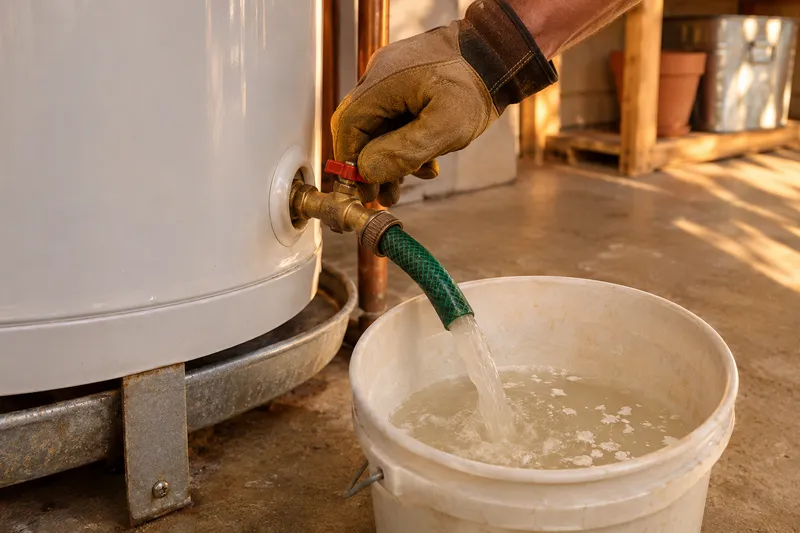
Those noises usually come from a layer of mineral sediment lying in the base of the tank. Pockets of water trapped beneath it flash to steam and pop. Flushing the tank can help if the heater is still in good shape.
Watch for tile that feels warm underfoot, a faint rush of water when nothing is on, cracked tile, damp carpet or a water meter that keeps moving. Each one is a solid reason to book leak detection.
Yes. Tankless units that show error codes, lose heat in the middle of a shower or slow down from scale can be serviced. See tankless water heater repair for the common faults.
Yes. A soggy patch in the gravel, a sinkhole near the walkway or a meter that turns with everything off can all mean the buried supply line is leaking. Water line repair explains how it is found and fixed.
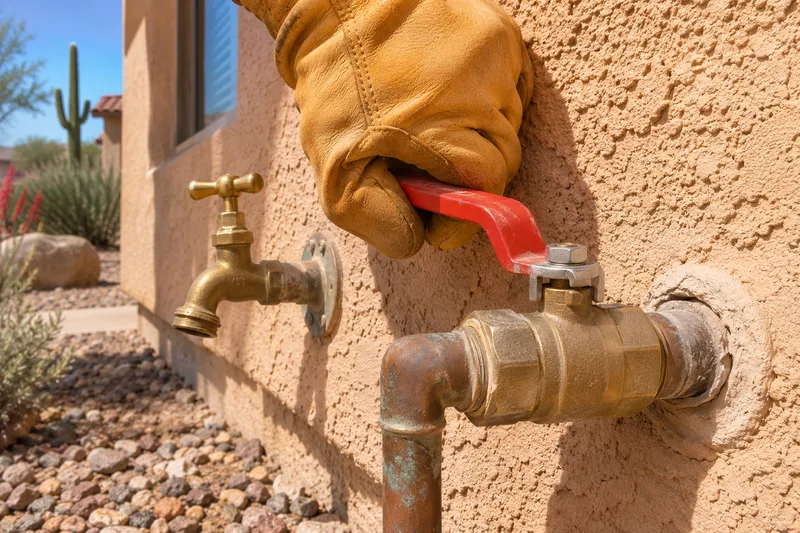
On many Bullhead City homes it sits where the supply line enters the house, often near the front hose bib or in the garage. There is also a valve at the meter by the street. Our guide to finding the main water valve shows where to look.
That crust is mineral scale left behind when hard water dries. It is mostly a cleaning job on the outside, but the same minerals collect inside cartridges and valves. If flow drops or a faucet starts to drip, the parts inside may need replacing.
Yes. Describe the symptoms on the phone and you get an honest view of how urgent it sounds. A slow drip under a sink can usually wait for a booked visit. Water coming through a ceiling or a tank leaking at the seam cannot.
Yes. When the plumber finds a tank rusted through or a heater too worn to be worth fixing, they will explain why and talk you through a replacement. You get the facts first and decide what to do.
Yes, it wears them down over time. Scale narrows openings, wears out valves and settles in water heaters. It rarely causes a sudden failure, but it shortens the life of almost everything water touches. Our guide to hard water and your plumbing covers what you can do about it.