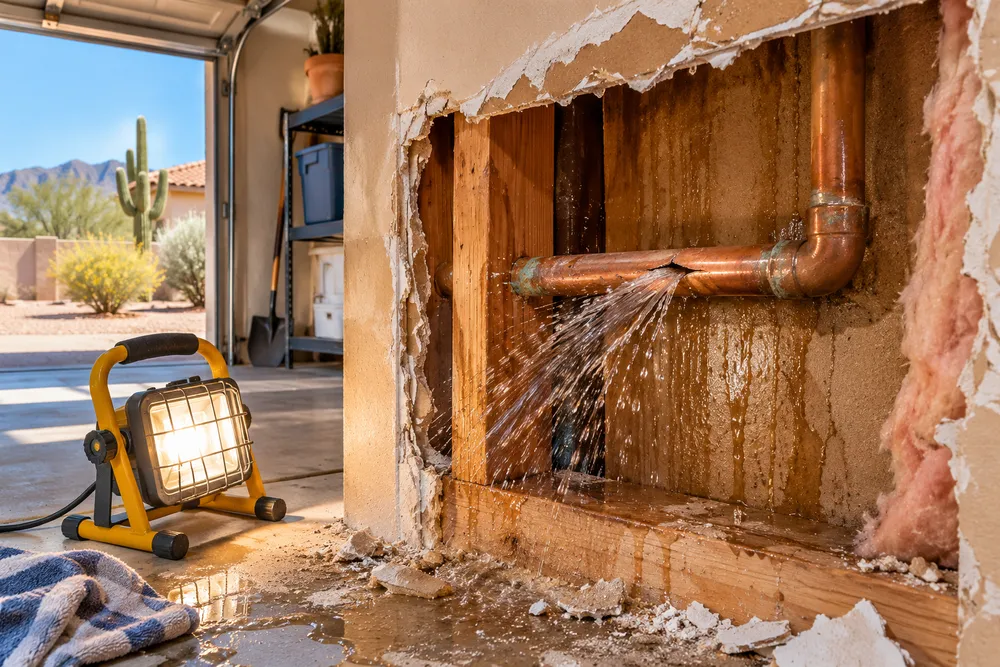
Pipe Repair in Bullhead City, AZ
If a pipe has burst, cracked or sprung a pinhole leak, a licensed local plumber can cut out the damage and replace it.
Compare burst and slow pipe leaksPipe repair in Bullhead City for burst and leaking pipes
Pipe repair in Bullhead City covers two very different situations. A burst pipe floods a room in minutes, while a pinhole leak can drip inside a wall for weeks. Both need a plumber, but the first steps are not the same.
When a pipe bursts
Water is spraying or pouring, and every minute adds to the damage.
- Close the main water valve right away
- Turn off power to any outlet or appliance the water is reaching
- Open a faucet at the lowest point of the house to drain the lines
- Move belongings and start soaking up water with towels
- Call us once the water has stopped flowing
When a pipe drips or weeps
The leak is slow, but it is still soaking whatever sits around it.
- Put a bucket or tray under the drip
- Close the nearest shut off valve if there is one
- Look for stains, soft drywall or bubbling paint around it
- Take a photo of the leak to show the plumber
- Book a visit before the wet area grows
Stop the water before you do anything else
On many homes here, you will find the main shut off at the spot where the supply pipe rises out of the ground and enters the house, often near the front hose bib or inside the garage. A quarter turn on a lever valve, or several turns on a round handle, cuts off water to every fixture in the house.
If that valve will not move, the curb valve in the meter box can stop the water too, though it may need a meter key. Learn where both are before you need them.
Once the water is off, our plumbing emergency steps explain how to drain the lines, protect your belongings and get ready for the plumber.
Find the main water valve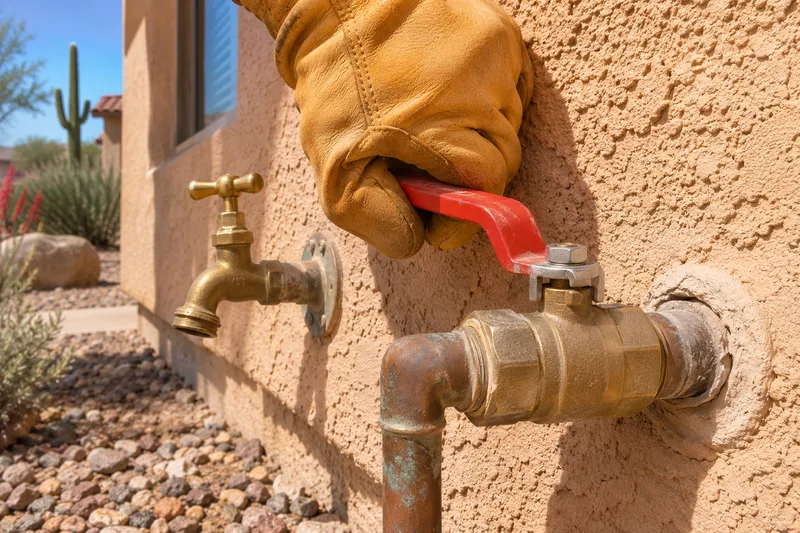
Pipe materials you may find in your home
Homes in Bullhead City were built over several decades, so the pipes inside them vary. The material matters, because each one fails in its own way and is repaired differently.
| Material | How to recognize it | Common trouble |
|---|---|---|
| Copper | Shiny or brown metal pipe with soldered joints | Pinhole leaks and worn spots, especially on hot lines |
| PEX | Flexible plastic tubing, often red, blue or white, with crimp rings | Leaks at fittings and damage where it rubs against something sharp |
| CPVC | Rigid cream or tan plastic pipe with glued joints | Brittle sections that crack, especially in hot spaces |
| Galvanized steel | Dull gray metal pipe with threaded joints | Rust inside the pipe, low flow and leaks at the threads |
| Gray plastic polybutylene | Flexible gray pipe found in some homes built before the late 1990s | Fittings and pipe that can fail without much warning |
To check what you have, look at the exposed pipes above the water heater or under a sink. A photo helps the plumber come prepared with the right parts.
How a broken pipe is repaired
Most pipe repair in Bullhead City homes is quick once the plumber can reach the pipe. Most of the care goes into finding the full extent of the damage.
Open up access
The plumber opens the smallest section of drywall or ceiling needed to reach the leak and see the pipe on both sides of it.
Check the pipe on each side
The pipe next to the leak is inspected for thin spots, corrosion or more damage, so the repair reaches sound pipe.
Replace the damaged section
The plumber removes the bad length and joins in new pipe, using fittings that match the material already in your home.
Test under pressure
The water is turned back on and the repair is checked for drips. The plumber also watches the meter for any second leak.
Patching drywall and painting usually happen after the plumber leaves, once the wall has had time to dry out completely. Leave the opening uncovered for a few days and run a fan if the cavity got wet, so no moisture is trapped behind the new drywall.
Small leaks worth checking for every few months
Most pipe leaks start small. A short walk around the house with a flashlight a few times a year can catch one before it soaks a cabinet or a wall.
Look for green or white crust on fittings, rust stains, drips and damp wood. Crust on a joint often means it has been weeping slowly for a while, even if it looks dry today.
Places to look
- Under kitchen and bathroom sinks, around the shut off valves and supply hoses
- The pipes and fittings above the water heater in the garage
- Behind the washing machine, at the hose connections
- Along ceilings below any attic water lines
- Around hose bibs and where pipes pass through outside walls
- Near the water softener connections, if you have one
Pipe repair details homeowners ask about
Open these for the decisions that sometimes come up during a pipe repair.
Replacing one section or a longer run
A single pinhole in an otherwise healthy pipe can be fixed by replacing a short section. When the plumber finds several thin spots or a second leak close by, replacing a longer run usually makes more sense than patching one leak at a time.
The plumber will show you what they found and explain the choice, so you can decide with the facts in front of you.
When repiping comes up
If a house has had leak after leak on the same type of pipe, the plumber may talk about replacing larger parts of the system. That conversation only makes sense when there is real evidence of widespread wear.
For leaks under the floor, see slab leak repair, where rerouting a line above the slab is often an option.
Pipes on outside walls during a cold snap
Hard freezes are rare here, but they do happen. Outside hose bibs and pipes in exterior walls are the most exposed. On a forecast freeze, disconnect garden hoses and cover outdoor faucets with an insulated cap.
If a pipe does split in the cold, it often leaks only after it thaws. Check exposed pipes the morning after a freeze.
Questions about burst pipes and pinhole leaks
Can I wrap a leaking pipe with tape until the plumber comes?
Repair tape or a pipe clamp may hold back a small leak for an hour or two. It only buys time and does not fix the pipe. Close the nearest valve or the main valve, then use tape only to limit dripping while you wait.
Why do pinhole leaks keep showing up in my copper pipes?
Repeated pinholes usually mean the pipe wall is wearing thin in more than one place. Water chemistry, high pressure and age all play a part. Read about hard water and your plumbing to see how minerals add to the wear.
What are the signs of a pipe leaking inside a wall?
Stains, paint that bubbles, drywall that feels soft, a damp baseboard and a musty smell are the usual clues. If you cannot see anything but the meter keeps moving, leak detection can find the leak without opening the wall first.
Should the main valve stay off until the repair is done?
If the leak cannot be isolated with a valve close to it, yes. Set aside some bottled water and a bucket for flushing toilets before the plumber arrives, and leave the valve off until the repair is tested.
Will the plumber fix the drywall too?
The plumber opens what is needed to reach the pipe and makes the plumbing repair. Drywall patching and painting are usually done afterwards, once the wall is dry.
Can high water pressure cause pipes to burst?
High pressure adds strain to every pipe and fitting and can make a weak spot fail sooner. A plumber can test your pressure with a gauge and check whether the pressure regulator is working.