How to Flush Sediment from a Water Heater
Draining the scale out of your tank once a year keeps a water heater quieter and working longer, and most homeowners can do it.
Check the tank before you startCheck these things before you flush a water heater
Flushing water heater sediment is a simple job when the tank is in good shape. Spend five minutes on these checks first, because a weak drain valve or a leaking tank changes the plan.
- The tank is dry around the base and there is no rust or crust at the seams.
- The drain valve near the bottom is not dripping and its handle turns by hand.
- You know where the cold water supply valve sits on the pipe above the heater.
- You have a hose that can stretch from the heater out to a driveway, gravel or a floor drain.
- You know whether the heater runs on gas or electricity.
- The area in front of the heater is clear so you can kneel and work safely.
If any of these fail, stop here and read the section on when not to flush the tank yourself. A plumber can still clear the sediment, but the tank may need a part first.
Why sediment builds up so fast in desert water heaters
Hard water carries dissolved minerals. When the water is heated, some of those minerals drop out and form a gritty, chalky layer across the tank floor. In a city with water this hard, that layer can grow quickly.
Sediment makes a gas burner work harder because heat has to pass through the scale before it reaches the water. In an electric tank, the lower element can end up buried in grit. Either way you lose hot water, hear popping and wear the tank faster.
Our guide to hard water and your plumbing explains where else the same minerals collect around the house.
How to flush water heater sediment step by step
These steps work for most standard tank heaters in a garage. Read them all before you begin, and go slowly the first time you flush water heater sediment yourself.
Turn off the heat source
On a gas tank, set the control to pilot or vacation. On an electric tank, switch off its breaker at the panel so the elements cannot run dry.
Let the water cool
Water in the tank can scald. Wait a few hours, or run hot water at a sink for several minutes, so the flush water is warm rather than very hot.
Close the cold supply
Turn the cold inlet valve above the tank until it stops. This keeps fresh water from rushing in while you drain.
Connect the hose
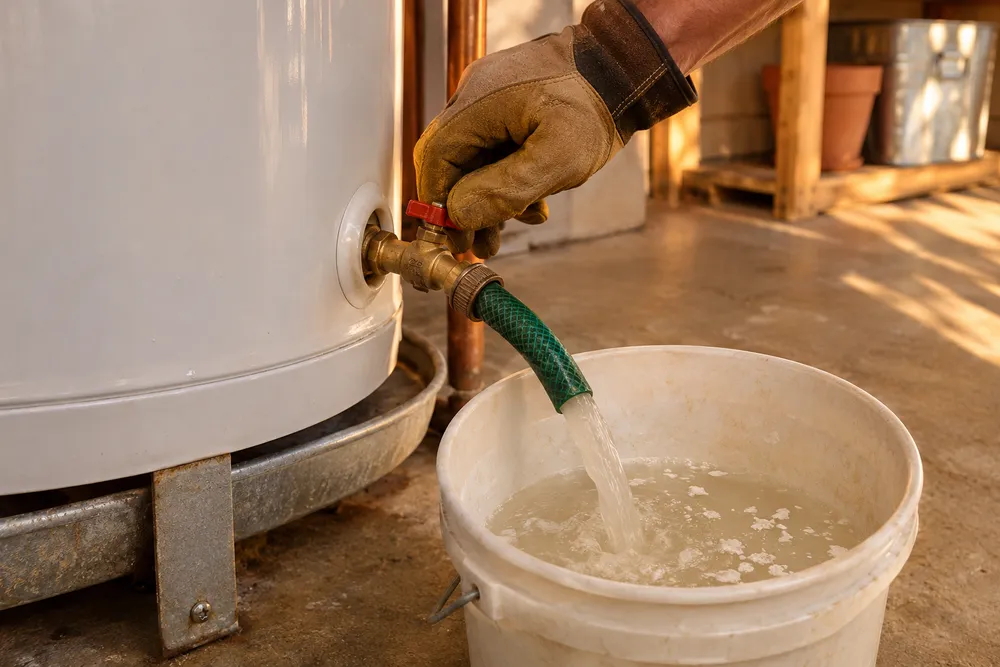
Screw a garden hose onto the drain valve at the bottom and run the other end outside to a spot where hot, cloudy water will do no harm.
Open a hot tap
Open the hot side of a faucet close to the heater. That lets air into the tank so it can drain freely instead of holding the water in.
Open the drain valve
Turn the drain valve slowly. Let the tank empty, watching the water at the end of the hose for grit, flakes and cloudiness.
Stir up the rest
With the drain still open, open the cold supply for a few seconds at a time. The burst of water churns up sediment so it flows out.
Refill before you restart
Close the drain, open the cold supply fully and wait until the hot tap runs steady with no sputtering. Only then turn the gas or power back on.
Check the drain valve for drips an hour after the heater is running again. A slow drip at that point usually means the valve washer is worn.
Gas and electric tanks need different first steps
The draining itself is the same on both types. What changes is how you shut the heat off and how you bring the heater back.
Gas water heater
- Set the gas control to pilot or vacation before draining, so the burner stays off.
- Leave the gas supply valve alone unless you know how to relight the pilot.
- After refilling, turn the control back to its normal setting and listen for the burner.
- If gas odor reaches you, quit right there, lead the family out and dial the gas company well away from the house.
Electric water heater
- Switch off the breaker for the heater before you open anything.
- Never restore power until the tank is completely full again.
- An element that runs in an empty tank burns out within seconds.
- If the heater still runs cold after a flush, a failed element is a likely cause.
What the water tells you as the tank drains
Watch the end of the hose while you flush. What comes out says a lot about the condition of the tank.
| What you see | What it usually means | What to do next |
|---|---|---|
| Clear water within a minute | Little sediment has built up | Flush again next year as usual |
| White or tan grit and flakes | Normal mineral scale from hard water | Keep flushing until it runs clear |
| Water stops flowing early | Scale is blocking the drain valve | Pulse the cold supply, or call us |
| Rusty or brown water | The tank lining or anode rod is wearing | Book a check of the anode rod |
| Water that smells like eggs | Bacteria reacting with the anode rod | Have the anode rod looked at |
Rusty water on every flush is worth a visit for water heater repair, because it can mean the tank itself is starting to corrode.
How often to flush a tank when the water is hard
Flushing water heater sediment once a year suits most homes here. Some households benefit from doing it more often.
Flush more often if
A large family uses a lot of hot water, the tank is set to a high temperature or you already hear popping. Twice a year keeps the layer thin before it hardens. A water softener slows the buildup a great deal, though it does not stop it entirely.
Start gently on an old tank
If a heater has never been flushed and is many years old, the scale may be thick and packed hard. A full flush can stir loose pieces that lodge in the drain valve. In that case a plumber can judge whether flushing still makes sense.
Pair it with other checks
While you are at the heater, look at the pipe connections above it and the pan underneath. Make it a habit to test the main valve too, using our guide to finding the main water valve, so you know it will close when you need it.
Problems people run into during a flush
Most flushes go smoothly. When one does not, it is usually one of these, and each has a simple next step.
The water stops flowing halfway through
A flake of scale has most likely wedged inside the drain valve. Close the valve, open the cold supply for a few seconds to build pressure, then open the drain again. The rush of water often pushes the blockage through.
If the flow still will not start, leave the tank as it is with the drain closed and call us. Forcing a wire into a plastic valve can crack it.
The drain valve will not close all the way
Grit caught on the valve seat can stop it from sealing. Open it fully and flush for another minute to wash the grit out, then close it again gently.
A valve that keeps dripping after that needs a new washer or a new valve. Put a bucket under it and keep the hose attached until a plumber can replace it.
Faucets sputter and spit after the refill
That is air leaving the lines, and it is normal. Run the hot side of each faucet in the house for a minute until the flow is smooth. The aerators may catch a little grit, so unscrew and rinse them if the flow looks weak.
The pilot will not light again on a gas tank
The label on the heater shows how to relight it. When the flame catches yet dies as soon as you release the control knob, the thermocouple may be worn. Do not keep trying, and never light anything if you smell gas.
When you should not flush the tank yourself
Flushing water heater sediment is routine maintenance, not a repair. If the heater already shows signs of failure, draining it can make a small problem bigger. Leave it closed and call us if any of these apply.
Stop and call a plumber if
- Water is already leaking from the tank, a seam or the bottom.
- The drain valve is plastic and cracked, or it will not turn by hand.
- The cold supply valve above the heater is stuck or leaks when turned.
- You smell gas, or the pilot will not stay lit.
- The tank is very old and has never been drained.
- Water is pooling and you cannot tell where it starts. Read our plumbing emergency steps for the first moves.
Descaling a tankless water heater is a different job
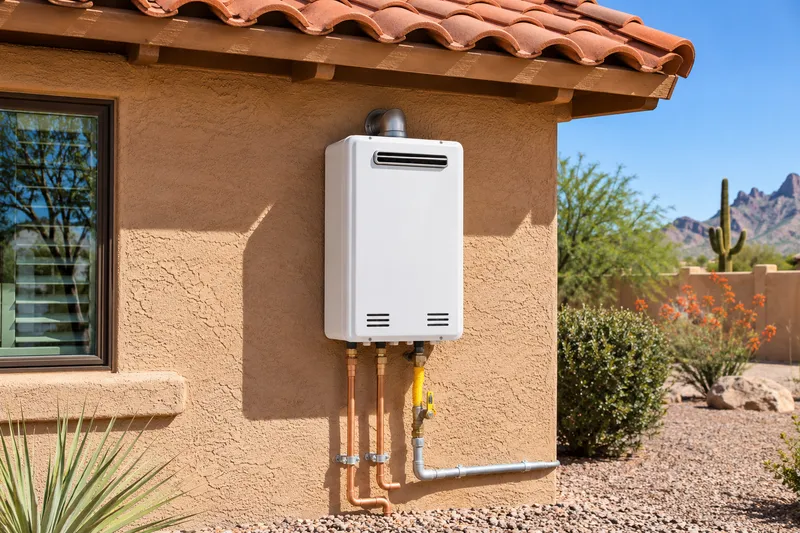
A tankless unit has no tank to drain. Scale collects inside its narrow heat exchanger, and the fix is to circulate a descaling solution through it with a small pump, using the service valves built into the plumbing.
Many units show an error code or cut out in the middle of a shower when scale gets bad. If yours has no service valves, or the code keeps coming back after descaling, book tankless water heater repair so a plumber can open it up.
Questions about flushing a water heater
Is a partial drain enough to flush water heater sediment?
You do not always need to empty it. A partial flush, where you open the drain for a few minutes with the cold supply on, removes loose sediment and is fine for a tank you flush every year. A full drain clears more and is better when the tank has been neglected.
Why is my water heater still popping after a flush?
Some scale bakes hard onto the bottom and will not wash out, so a little popping can continue. If the noise is as loud as before, the drain may have clogged early and left most of the sediment behind.
Try one more flush, pulsing the cold supply. If that changes nothing, ask about water heater repair so the tank can be checked.
Can flushing cause a leak?
Flushing does not damage a sound tank. On an old tank, though, the scale can be the only thing sealing a weak spot, and an old drain valve can start to drip after being opened. That is why the checks at the top of this guide matter.
Where should the drain water go?
Run the hose to a driveway, a gravel area or a floor drain that can take warm, cloudy water. Keep it away from plants you care about at first, because the water can be hot and full of minerals. Never drain it onto a neighbor's property.
Will a water softener mean I never need to flush?
A softener reduces the minerals that form scale, so the tank stays cleaner for much longer. It is still worth flushing every year or two to clear what does collect. Read more in our guide to hard water and your plumbing.
More reading for looking after your plumbing
These guides go well with a yearly flush, because hard water, a stuck main valve and hidden leaks often show up together.