Why Is My Water Bill So High?
A sudden jump in water use usually means a leak, and these checks help you find it before you call us.
Check the usual reasons firstCommon reasons for a high water bill
If a high water bill arrived and nothing at home has changed, start here. These are the causes we see most in Bullhead City homes, roughly from the easiest to spot to the hardest.
| Cause | What you might notice | Where to look next |
|---|---|---|
| Running toilet | A hiss or a tank that refills on its own | Do the dye test below, then read about toilet repair |
| Dripping faucet or shower | Drips you can see or hear, white crust at the spout | Check every tap, then see faucet and sink repair |
| Irrigation leak | Soggy gravel, a green patch or a broken emitter | Walk the drip lines with the system running |
| Water softener stuck in a cycle | Water running to the drain long after it should stop | Listen at the softener and check its settings |
| Leak in the yard line | A wet spot or sinking ground along the path of the buried supply pipe | Meter test, then water line repair |
| Leak under the slab | A warm floor, cracked tile or the sound of running water | Meter test, then leak detection |
Higher use in summer is normal when irrigation runs longer and people are home more. A jump in a cool month, or one that keeps growing, points to a leak.
How to use your water meter to test for a leak
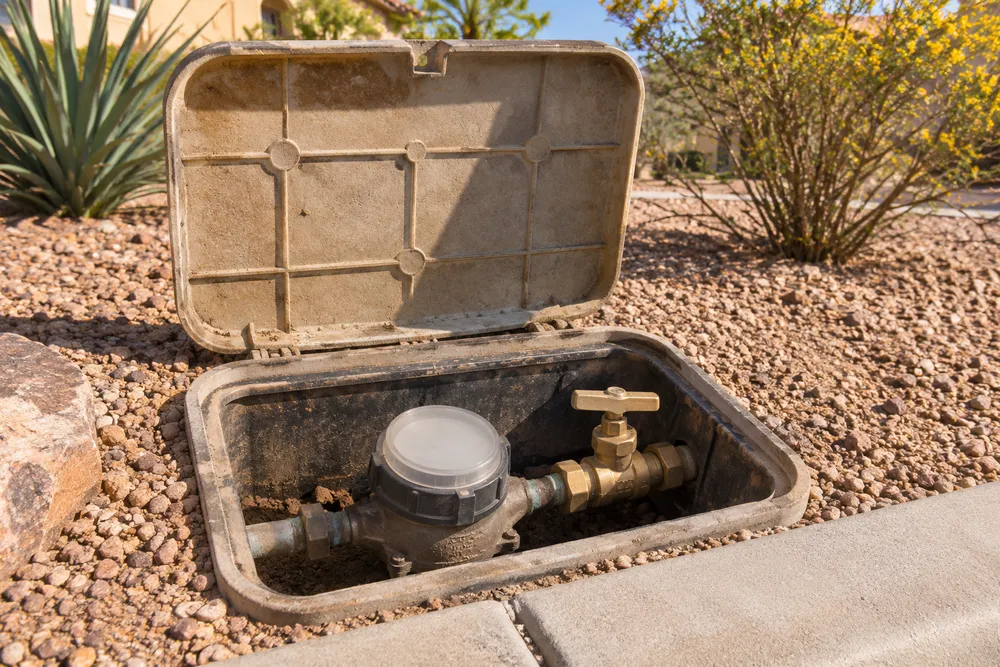
Your water meter is the best leak detector you already own. On most homes here it sits in a box near the street, set into the gravel or the sidewalk.
Stop all water use
Make sure no tap is open and that the irrigation, laundry machine, dishwasher and ice maker are all idle. Nobody should shower or flush during the test.
Open the meter box
Lift the lid carefully, because insects and spiders like the shade inside. Look for the small triangle or star shaped dial that spins when water moves.
Watch the leak indicator
If that small dial turns while everything is off, water is leaving the pipes somewhere. Even a slow creep counts.
Do the long test
Write down the full reading, wait an hour or more without using water and read it again. Any change confirms a leak.
Next, close the main valve at the house and watch again. If the dial stops, the leak is inside the house or under the slab. A dial that still creeps means the culprit is the underground line outside. Our guide to finding the main water valve shows where that valve usually sits.
Toilets are the leak most people miss
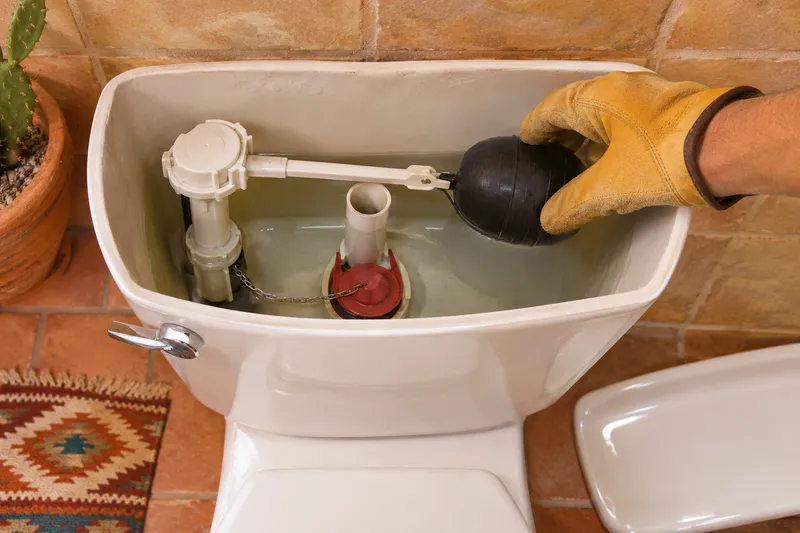
A toilet can waste a great deal of water without ever overflowing. A worn flapper lets tank water seep past it, so the fill valve keeps switching on to replace what was lost, over and over. Hard water speeds this up by roughening the flapper seat.
The dye test takes ten minutes and tells you for certain.
- Lift the tank lid and squeeze some food dye into the tank water
- Do not flush for ten to fifteen minutes
- If the bowl water turns colored, the flapper is leaking past its seat
- Check the overflow tube too. Water running into it means the fill level is set too high
- Flush when you are done so the color washes away
Leaks you cannot see from inside the house
When the meter moves but every fixture looks dry, the water is going somewhere hidden. These are the usual places.
Under the concrete slab
Many Bullhead City homes are built on a slab with the supply pipes running underneath. A pinhole in one of those pipes can leak for months before you see it. A warm patch on the floor, the sound of water or cracks in tile are the clues. Slab leak repair explains what happens next.
Out in the yard along the buried service line
The buried service line can crack or loosen at a fitting. In a dry gravel yard, a spot that stays damp, a patch of weeds that suddenly thrives or ground that sinks a little are all worth a closer look.
In the irrigation system
Drip lines, emitters and valve boxes take a beating from sun and heat. A cracked fitting can leak only while the timer runs, which is why it rarely shows up during the meter test. Watch a full irrigation cycle at least once.
Inside walls and ceilings
Pipes inside walls can leak at fittings or through pinholes. Look for bubbling paint, soft drywall, stains and a musty smell. If you find any, close the main and see pipe repair.
Check the water softener before you blame the pipes
A water softener rinses itself with water from time to time, a cycle called regeneration. If its timer is set wrong, a valve sticks or the control loses power, it can regenerate far more often than needed or get stuck sending water down the drain for hours.
Listen near the softener at night. Steady running water there, with nothing else in use, is a sign it is stuck. Our guide to hard water and your plumbing explains what a softener does and what it needs.
A high water bill from a leak, or just higher use?
Not every high bill means a leak. Compare what you see against these two lists before you book a visit.
It is probably a leak if
- The meter moves with every fixture and the irrigation turned off
- Use went up in a month when nothing changed at home
- You hear water running when the house is quiet
- A floor, wall or patch of yard stays damp for days
- The toilet dye test shows color in the bowl
It may be normal use if
- The irrigation timer was set longer for summer
- You had guests staying or filled a pool or spa
- The meter stays still during the test
- The jump matches a change in the billing period length
- Use returns to normal the following month
Clues behind a high water bill, on paper and around the house
Before you go hunting under floors, a few minutes with your past bills and a walk around the property can narrow things down.
Compare the water used, not the amount owed
Your bill shows how much water passed through the meter in each period. Lay the last few bills side by side and compare those usage figures, not the totals, because rates and charges can change while your use stays the same.
Check the number of days in each billing period too. A longer period naturally shows more use.
A sudden jump or a slow climb
A sudden jump from one bill to the next often points to something that failed all at once, such as a toilet flapper, a broken irrigation fitting or a softener stuck in a cycle.
A slow climb over several bills fits a leak that is growing, which is typical of a pinhole in a pipe under the slab or in the yard line.
After a recent plumbing job or appliance install
If the jump started soon after a new dishwasher, washer, fridge or water heater went in, look at those connections first. A fitting that was not fully tightened can weep slowly behind the appliance.
Pools, spas and automatic fill valves
A pool or spa with an automatic fill valve tops itself up as water evaporates, and desert heat means a lot of evaporation. If the valve sticks open or the pool itself leaks, the fill valve can run for hours. Watch the pool level with the autofill turned off for a day.
When to book leak detection
If the meter test confirms a leak and you cannot find it at a toilet, faucet or irrigation line, it is time for a plumber. Leak detection uses listening equipment, pressure tests and moisture meters to find the exact spot, so only a small area of floor, wall or yard needs to be opened.
Call us sooner rather than later. A small leak under a slab or in the yard line tends to grow, and the water it releases can soften soil and damage flooring well before you see it.
Book a visit right away if
- The meter moves during the test and every fixture is dry
- A section of floor feels warm or you hear running water
- Pressure has dropped at every faucet in the house
- A wet spot in the yard keeps coming back
Water bill and leak questions we hear often
Is the leak inside the house or out in the yard?
Close the main valve at the house and watch the meter. If the dial stops, the leak is inside the house or under the slab. If it keeps moving, the water is escaping from the buried pipe that runs out to the street. Our water line repair page covers that kind of leak.
Can a running toilet really cause a high water bill?
Yes. A toilet that never stops running empties water into the bowl around the clock, and it is one of the most common causes of a high bill. Replacing the flapper or the fill valve normally solves it.
Is a high water bill in summer normal?
Some of it is normal. Irrigation runs longer in the heat, and pools and coolers need topping up. If use is far higher than last summer, or stays high once the weather cools, run the meter test.
Will my homeowners insurance cover a slab leak?
That depends on your policy, so ask your insurance company. Keep photos, notes and the plumber's findings, because they help whatever your policy says.
What should I do if I find a leak but it is not urgent?
Close the valve that feeds it if you can, keep an eye on it and book a visit. If the water cannot be isolated or is spreading, follow our plumbing emergency steps and call us.