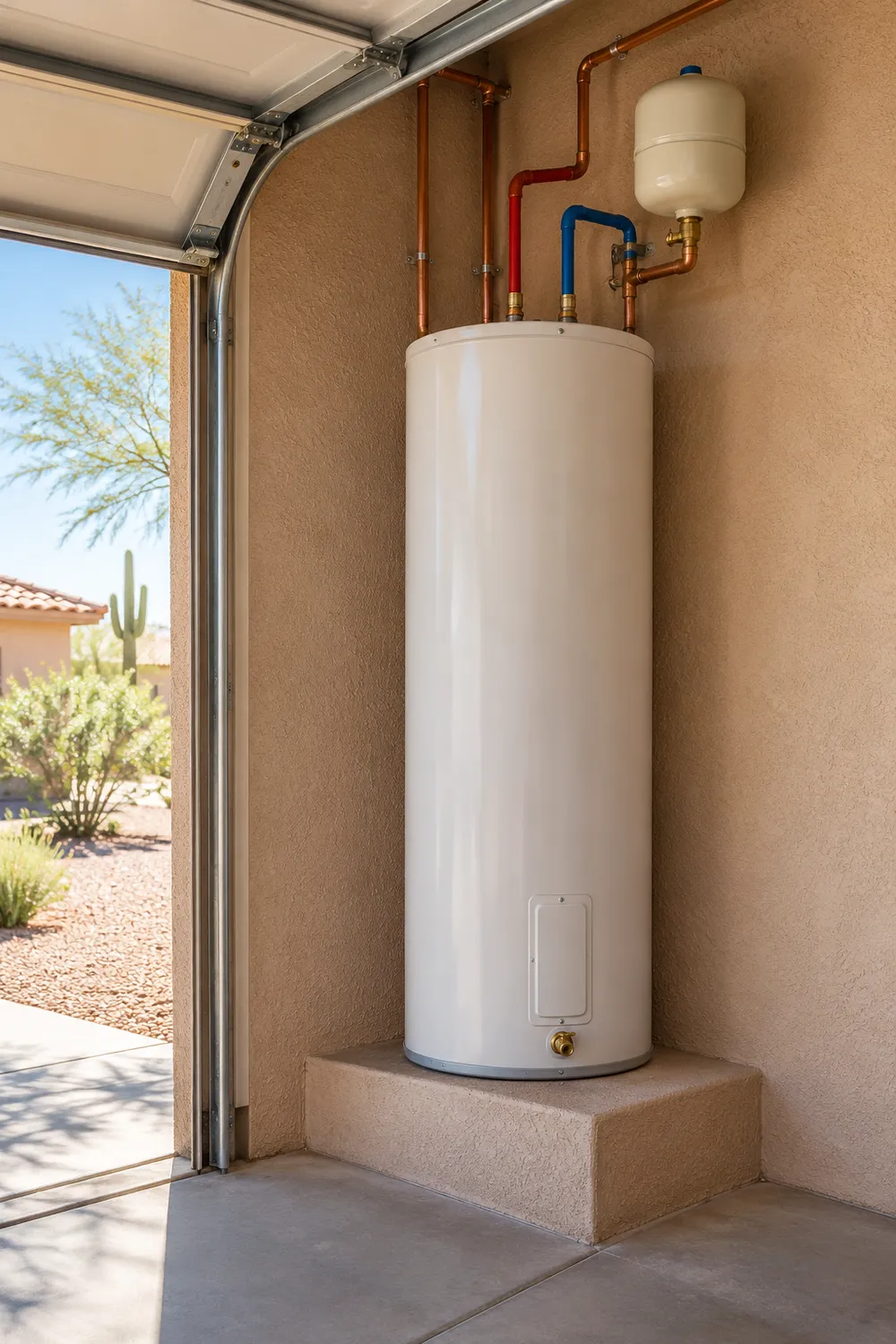
Water Heater Repair in Bullhead City, AZ
A licensed plumber who works in Bullhead City can repair a tank heater that leaks, runs cold or pops and rumbles.
Check what your heater is doingWhat a failing tank water heater sounds and looks like
Water heater repair in Bullhead City is usually about a tank that has worked hard for years in a hot garage with mineral heavy water. Heat and scale wear out its parts faster, and the warning signs tend to show up together.
Most of these problems can be repaired if they are caught before the tank itself starts to leak.
Call us about any of these
- Water pooling around the base of the tank
- Popping, rumbling or crackling while the heater runs
- Hot water that runs out much sooner than it used to
- Rusty or cloudy hot water at the taps
- A pilot light that will not stay lit on a gas heater
- Water dripping from the relief valve pipe
- A gas smell near the heater, which means getting everyone outside and phoning the gas company before anything else
Why scale is the biggest enemy of a tank heater here
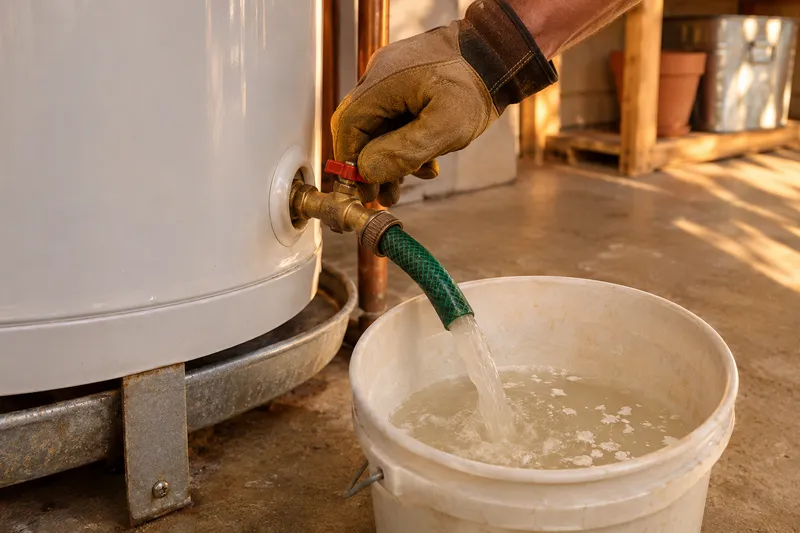
Hard water carries calcium and magnesium. When the water is heated, those minerals settle to the bottom of the tank as sediment. Over time the layer grows thick enough to trap water beneath it, and that water boils in small pockets and makes the popping you hear.
A thick layer of sediment sits between the flame or bottom element and the water, so each heating cycle takes longer and gives you less hot water. It also fills space inside the tank and can block the drain valve.
Flushing the tank once a year slows this down. Our guide to flushing sediment from a water heater walks you through it, and a plumber can do it during a repair visit.
Common faults on gas heaters and on electric heaters
Both types share a tank, a relief valve and a drain valve. The heating parts differ, so water heater repair in Bullhead City looks a little different for each.
Gas water heaters
- A pilot light that goes out or will not light
- A worn thermocouple or flame sensor
- A burner clogged with dust or lint
- Poor venting, which can leave scorch marks near the top
- A gas control valve that no longer responds
Electric water heaters
- A burned out upper or lower heating element
- A faulty thermostat on one element
- A tripped reset button or breaker
- Loose or scorched wire connections
- Lukewarm water when only one element still works
Which repair matches the symptom
Use this table to narrow down what your heater needs before you call about water heater repair in Bullhead City.
| Symptom | Likely cause | Usual repair |
|---|---|---|
| Every tap runs cold | The pilot has gone out, the thermocouple failed, a breaker tripped or an element burned out | Relight the pilot or replace the thermocouple, reset or replace the element |
| Hot water runs out quickly | Heavy sediment, a burned out bottom element or a cracked dip tube | Flush the tank, replace the element or the dip tube |
| Water too hot or not hot enough | A thermostat set wrong or failing | Test and adjust or replace the thermostat |
| Popping and rumbling | Sediment on the bottom of the tank | Flush the tank and check the burner or element |
| Dripping relief valve pipe | Pressure too high or a worn relief valve | Test the pressure, replace the valve, check the expansion tank |
| Rusty hot water | A worn anode rod letting the tank corrode | Replace the anode rod before the tank rusts through |
| Leak from the tank itself | Corrosion has eaten through the tank wall | Replace the water heater |
A leak that comes from a fitting, a valve or the pipes above the tank is usually repairable. A leak from the tank body is not, so it helps to dry the area and look closely before you call.
What summer in a hot garage does to a water heater
Most heaters in Bullhead City homes sit in garages that stay very hot for months at a time, which is why water heater repair here so often involves valves and seals.
Summer garage heat is hard on the plastic and rubber parts around the heater, including the relief valve seat, the drain valve and the supply connections. These parts dry out and crack sooner than they would indoors.
Heat also matters for the expansion tank, if your home has one. When the air charge inside it is lost, pressure climbs every time the heater runs, and the relief valve starts to drip.
None of this means the heater will fail early, but a yearly look is worth doing. Check the base and the pipes above the tank for rust, white crust or damp spots.
Keep the space around the heater clear as well. Boxes, paint cans and garden chemicals stacked against a gas heater block the air it needs and can catch fire, and clutter makes a leak harder to spot early.
How a plumber handles water heater repair in Bullhead City
Check safety first
On a gas heater the plumber checks for any gas smell, looks at the venting and confirms the flame burns clean and blue. On an electric heater the power is shut off before any panel comes off.
Test the parts
Thermostats, elements, the thermocouple and the relief valve are tested one at a time. The anode rod and the sediment level are checked where possible.
Explain repair or replacement
You hear what has failed and whether a repair is worth doing on a heater of that age and condition. The choice is yours.
Repair and refill
Failed parts are replaced, the tank is refilled with the air bled from the lines, and the heater runs a full cycle while the plumber checks every connection.
If the heater is past saving, the plumber will explain why and talk you through a replacement before anything is removed.
Parts inside the tank that people rarely hear about
Open a panel to read about the parts that quietly decide how long a tank lasts.
The anode rod
The anode rod hangs inside the tank and corrodes on purpose so the tank lining does not. Once it is used up, the tank itself starts to rust. Hard water wears anode rods out faster.
Replacing a worn rod is one of the best ways to extend the life of a tank that is otherwise sound.
The temperature and pressure relief valve
This valve on the top or side of the tank opens if the temperature or pressure inside gets too high. It is a vital safety device, so never cap or plug the pipe that runs from it.
A valve that drips may simply be worn, or it may be warning you that pressure in the house is too high. A plumber tests both before replacing anything.
The dip tube
Cold water enters the tank through the dip tube, which carries it to the bottom so it does not mix with the hot water at the top. If the tube cracks, cold water mixes in early and hot water seems to run out fast. Small bits of white plastic in faucet aerators can be a sign of a broken dip tube.
The drain valve
The drain valve near the bottom lets you flush out sediment. Plastic drain valves can crack or clog with scale, and a valve that has never been opened may leak once it is. A plumber can fit a sturdier one while the tank is drained.
The expansion tank
Many homes have a small expansion tank on the cold water line above the heater. It gives heated water room to expand. If its air charge is gone, tap it and it will sound full rather than hollow, and the relief valve may start to drip. A plumber can recharge or replace it.
Water heater questions from homeowners
How many years can a tank heater be expected to run?
There is no fixed answer. Hard water and a hot garage both wear a tank down sooner, while a heater that is flushed once a year and gets a new anode rod when the old one wears thin tends to keep going well past one that is ignored. The plumber can look at yours and give you an honest read.
Is it worth repairing an older water heater?
If the tank itself is not leaking, many repairs are worth doing. Elements, thermostats, thermocouples and valves can all be replaced. If the tank is rusting through, replacement is the only safe choice.
What causes a sulfur smell in my hot water?
That smell usually comes from a reaction between the anode rod and bacteria in the water. A plumber can flush the tank and fit a different type of anode rod to stop it.
Is it safe to stay home if I smell gas near the heater?
No. Get everyone out of the house without touching light switches or appliances, and phone the gas company from outdoors. When they have checked the gas and given the all clear, call us about the heater.
Can I flush my water heater myself?
Yes, if you are comfortable turning off the power or gas and handling hot water. Our guide to flushing a water heater explains each step. If the drain valve is stuck or leaks, stop and call us.
Do you work on tankless water heaters too?
Yes. Tankless water heater repair covers error codes, scale buildup and units that shut off in the middle of a shower.